
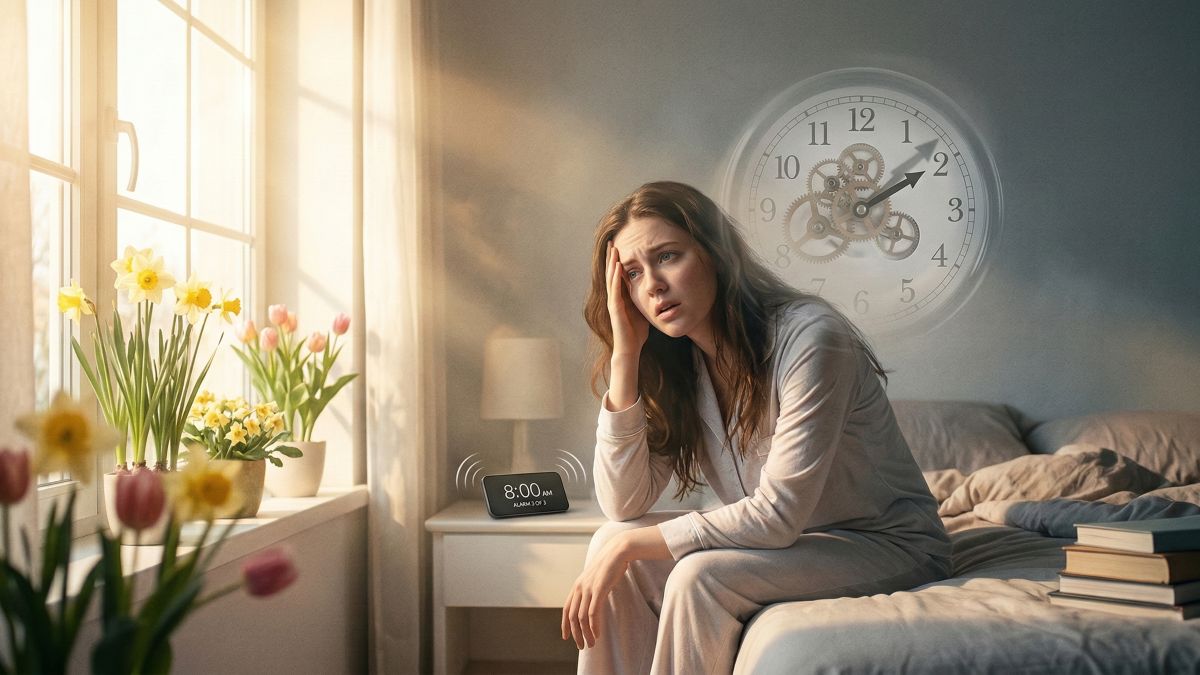
Jenna set three alarms on Saturday night and still felt disoriented when her phone buzzed Sunday morning. Like more than half of Americans surveyed by the American Academy of Sleep Medicine, she noticed the seasonal clock change immediately disrupted her sleep, mood, and alertness.
Daylight saving time returned on March 8, 2026, pushing clocks forward by one hour. The shift sounds small, but for the estimated 55% of Americans who report negative effects from the transition, according to AASM, it can trigger days of poor sleep, heightened anxiety, and difficulty concentrating.
What Happens to Your Body When Clocks Spring Forward
The human body relies on a circadian rhythm — an internal clock synchronized primarily by light exposure. When external time shifts by even one hour, the brain struggles to catch up.
According to CNN wellness expert Dr. Leana Wen, a George Washington University professor and former Baltimore health commissioner, the spring transition creates a mild form of jet lag. The body continues operating on its previous schedule, disrupting sleep, appetite, and emotional regulation.
Research published in BMJ Medicine analyzed nearly 14 million U.S. deaths between 2015 and 2019 and found the spring time change was linked to measurable shifts in mortality patterns.
| Effect | What Research Shows | Who Is Most Affected |
|---|---|---|
| Sleep disruption | Circadian rhythm misalignment for 3–7 days (AASM) | Adolescents, shift workers, light sleepers |
| Cardiovascular risk | Uptick in heart attacks and strokes in the days following the change (American Heart Association) | Adults over 50, people with existing heart conditions |
| Mood and anxiety changes | Majority report worsened mood and alertness (AASM survey) | People with anxiety disorders, depression, or SAD |
| Traffic and workplace safety | Increase in fatal car crashes in the week after spring forward (AAA Foundation data) | Commuters, early-morning workers |
Why Spring Specifically Triggers Anxiety
The clock change is only part of the picture. Mental health professionals have observed that anxiety and depression can spike during spring months for several overlapping reasons:
- Disrupted routines. Winter habits — earlier bedtimes, indoor schedules — get shaken up by longer daylight and social expectations.
- Social pressure. Warmer weather brings expectations to be more active, more social, and more productive, which can overwhelm people already managing stress.
- Failed resolutions. By March, many people who set ambitious January goals feel a sense of falling short, according to findings from the American Psychiatric Association.
- Allergens. Rising pollen levels have been connected to increased symptoms of anxiety and mood disturbances in emerging research.
Heading into 2026, the APA’s Healthy Minds Poll found that 59% of Americans reported feeling anxious about personal finances and 53% about uncertainty regarding the coming year.
5 Evidence-Based Steps to Protect Your Well-Being
- Get morning sunlight within 30 minutes of waking. Light exposure is the strongest signal for resetting your circadian clock. Open curtains, step outside, or turn on bright indoor lights if the sun is not yet up.
- Shift your bedtime earlier by 15–20 minutes. Gradual adjustments over several nights reduce the shock of losing an hour. Keep screens out of the bedroom in the final hour before sleep.
- Move your body for at least 2.5 hours per week. A 2024 study from Mass General Brigham found that this level of moderate exercise meaningfully improves mood, stress levels, and sleep quality.
- Hold your daily routine steady. Eat, work, and wind down at consistent times. Predictability helps the brain register stability during a transition.
- Track your mood for the next 7 days. Journaling or a simple daily check-in can help catch early signs that the adjustment is becoming something more persistent.
What to Watch Out For
- Fatigue lasting more than a week after the time change may signal a deeper sleep issue worth discussing with a doctor.
- Persistent low mood, irritability, or heightened anxiety beyond the first few days could indicate seasonal affective disorder or another condition that responds well to professional support.
- Adolescents may show the effects through attention problems, school performance dips, or increased emotional reactivity — not just tiredness.
- People with bipolar disorder should monitor closely: increased spring light exposure has been linked to manic episodes in clinical literature.
The Bottom Line
The spring time change is more than a minor inconvenience. For millions of Americans, it disrupts sleep, amplifies anxiety, and strains emotional resilience for days. The good news: simple adjustments — morning light, consistent routines, moderate exercise, and honest self-monitoring — can shorten the recovery window significantly. If symptoms persist beyond a week, speaking with a healthcare provider is a smart move, not an overreaction.
Frequently Asked Questions
How long does it take to adjust to daylight saving time?
Most adults adapt within three to seven days, according to sleep researchers. The adjustment period depends on baseline sleep habits, age, and sensitivity to circadian disruption. People who are already sleep-deprived before the change often take longer to recover.
Can the time change actually worsen anxiety disorders?
Yes. The American Academy of Sleep Medicine notes that disrupted sleep is a well-established trigger for anxiety symptoms. For individuals with pre-existing anxiety disorders, even one hour of lost sleep can intensify worry, restlessness, and difficulty concentrating for several days.
Does daylight saving time affect children differently than adults?
Children and teenagers tend to have more difficulty adjusting, particularly adolescents whose circadian rhythms naturally shift toward later sleep and wake times. Parents may notice increased irritability, attention issues, or resistance to morning routines for up to a week after the change.
Are there states that do not change their clocks?
Hawaii and most of Arizona do not observe daylight saving time. The U.S. territories of Puerto Rico, Guam, American Samoa, the U.S. Virgin Islands, and the Northern Mariana Islands also remain on standard time year-round.
What if my sleep problems do not improve after a week?
Persistent sleep disruption beyond seven to ten days may indicate an underlying sleep disorder or a mental health condition that could benefit from professional evaluation. Speaking with a primary care doctor or a sleep specialist is a reasonable next step.
Is there any benefit to the spring time change for mental health?
Longer evening daylight hours encourage outdoor activity and social connection, both of which are linked to improved mood over time. The initial disruption is real, but many people report feeling better once the adjustment period ends and they gain access to more sunlight in the evenings.
Should I avoid caffeine after the time change?
Limiting caffeine after early afternoon is generally recommended during the adjustment period. Caffeine has a half-life of roughly five to six hours, meaning an afternoon cup can still interfere with falling asleep at a shifted bedtime.