
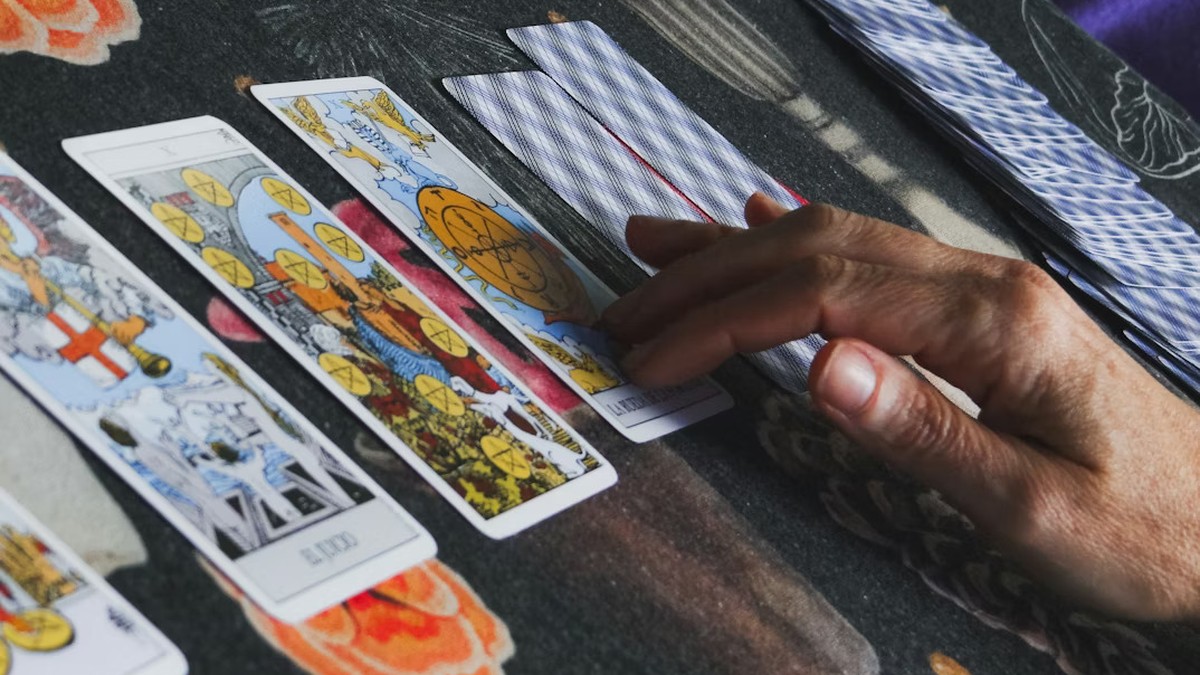
Tarot can be a quiet way to reflect on your day without turning it into a performance.
A small evening ritual helps you notice patterns, emotions, and needs you might otherwise miss.
This guide offers a gentle process you can repeat in under fifteen minutes.
Tarot doesn’t have to be dramatic to be useful. It can be a soft mirror – an invitation to look at your day with a little more honesty and a little less judgement. When you treat the cards as prompts, they become a language for noticing what’s already inside you.
This evening ritual is designed for consistency. You will use a small spread, ask grounded questions, and journal just enough to capture the insight. Over time, the repetition becomes a kind of emotional hygiene.
Set the tone: a small, quiet container
Choose a regular time – after dinner, before bed, or after a shower. Put your phone on silent. Light a candle if it helps, or simply sit with a glass of water. The point is to create a boundary between the day you lived and the night you’re entering.
If you’re new to using tarot in this way, Tarot for self-reflection: using the cards as a tool for personal growth provides a deeper foundation for approaching the cards as inner work rather than prediction.
Step 1: a one-card “day summary” pull
Shuffle with a simple intention: “Show me the heart of today.” Pull one card and place it in front of you. Spend one minute noticing what stands out: a colour, an expression, a symbol.
Then write three lines:
1) What part of today felt like this card?
2) What did I avoid?
3) What did I do well?
Keep it honest and plain. You are not writing poetry. You are naming reality.
Step 2: a three-card “release, receive, respond” spread
This spread is simple, practical, and gentle. Pull three cards and read them in this order:
- Release: what I can loosen my grip on tonight.
- Receive: what support is available to me now.
- Respond: one small action for tomorrow.
The “Respond” card keeps tarot grounded. It moves you from insight to behaviour without demanding a life overhaul.
Step 3: close the ritual with a body cue
Before you put the deck away, ask your body a simple question: “Where do I feel tension?” Put a hand on that area and breathe slowly for five breaths. This brings the ritual out of the mind and into the body, where stress actually lives.
If you like pairing reflection with a stress-relief practice, 5 ancient meditation techniques for modern stress relief offers options you can blend into your evening routine without making it complicated.
What to do when the cards feel “negative”
Some cards can feel heavy, especially when you’re tired. Instead of treating them as bad omens, treat them as emotional weather. Ask: what is this pointing to in my current experience? What is it asking me to acknowledge?
Sometimes a difficult card is simply permission to rest. Sometimes it’s a reminder that you’re pushing too hard. Sometimes it reflects conflict you haven’t named.
How to build meaning over time
The magic of an evening tarot practice shows up across weeks, not minutes. You start noticing repeats: the same themes, the same stress cycles, the same patterns in relationships. That pattern recognition is the real gift.
Try a weekly review. Once a week, glance back at your notes and circle:
- Cards that repeat
- Emotions that repeat
- Actions that helped
- Actions you keep postponing
This turns tarot into a tool for self-trust. You’re not asking the world to give you certainty; you’re learning how you respond to life.
Pair tarot with a bigger self-discovery map
If you enjoy symbolic language, you may also like astrology as a reflective tool. Tarot can show the mood of a moment; astrology can suggest longer patterns. If you’re curious, Understanding your birth chart: a beginner’s guide to astrological self-discovery is a good companion for exploring themes over time.
Keep it gentle so you actually return
Rituals work when they are easy enough to repeat. If you skip a night, return the next night without guilt. If the three-card spread feels like too much, do the one-card pull and close the deck.
Your practice is not a test. It’s a relationship with your inner life. A gentle evening ritual can become a steady place to land, especially when the outer world feels loud.